
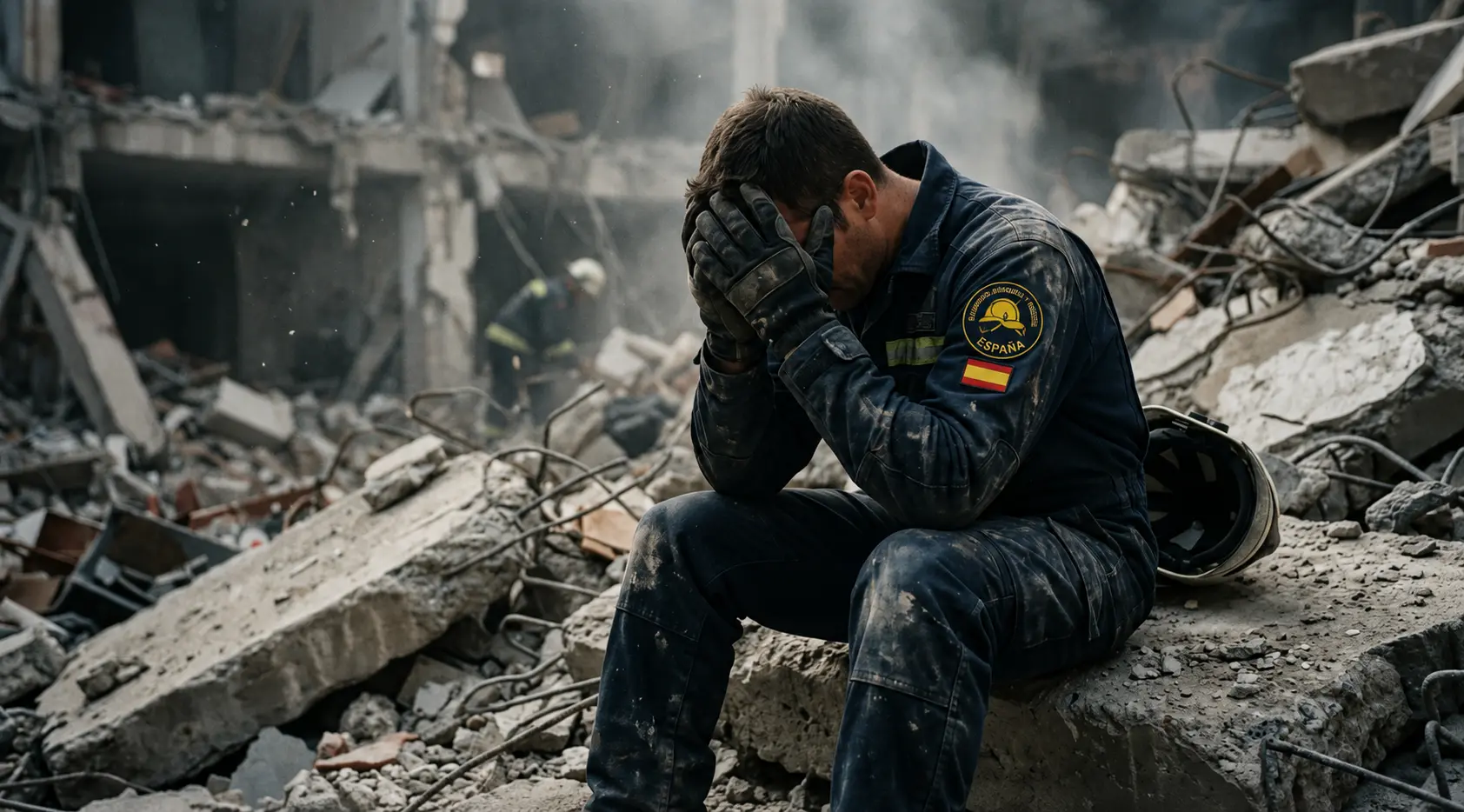
When we see news about an earthquake or a devastating flood, cameras usually focus on the action: the debris, heavy machinery, dust, and the miraculous moment when a firefighter pulls a person out alive. However, there's a part of operational missions that is rarely discussed: the emotional toll paid by emergency teams.
For members of Firefighters Search and Rescue Spain, being at ground zero of a natural or human disaster means facing extreme situations. Today, we want to highlight the importance of mental health for professional rescuers.
Exposure to Critical Incidents
Unlike common work stress, firefighters and USAR teams face what is known in emergency psychology as "Critical Incidents". These are sudden events that exceed an individual's normal coping capacity.
During an international mission (such as disasters caused by earthquakes), our firefighters operate under extreme conditions:
Severe sleep deprivation and extreme physical fatigue.
Time pressure: The clock runs against the victims' chances of survival.
Life-or-death decisions: Sometimes it's necessary to prioritize structures with higher viability and abandon others, which generates enormous frustration and helplessness.
Exposure to suffering: Dealing firsthand with families who have lost everything and facing the recovery of deceased victims, often under very harsh conditions.
Post-Traumatic Stress (PTSD) and "Empathy Burnout"
The human body is not designed to normalize tragedy. Accumulating critical experiences without an adequate outlet can lead to psychological problems in the medium and long term.
Two of the most common syndromes in our sector are:
Post-Traumatic Stress Disorder (PTSD): Can manifest months after the mission through flashbacks (reliving images or smells of the catastrophe), insomnia, hypervigilance, irritability, and isolation.
Empathy burnout or "Compassion Fatigue": Is the deep emotional exhaustion derived from constantly connecting with the suffering of others. The rescuer may feel an emotional void where it seems "nothing affects them anymore" (a defense mechanism) or, conversely, feels overwhelmed by pessimism.
How is the Rescuer's Mind Cared For? (Techniques and Protocols)
Psychological preparation is as important as wearing a helmet and boots. In modern rescue organizations, mental health is managed before, during, and after an incident.
1. Psychological "Defusing" and "Debriefing"
One of the most vital tools is Defusing. It is carried out immediately after a critical intervention, often at the same Base of Operations (BoO). It consists of an informal team meeting to verbalize what has been done, what has been seen, and to "vent" initial emotions before going to sleep. Days later, a Debriefing is conducted, a more structured session, often guided by emergency psychologists, to process the experience more deeply and identify members who may need professional support.
2. Peer Support
Nobody understands a firefighter better than another firefighter. Camaraderie is the best protective shield. Speaking openly at the station or in the camp, destigmatizing "feeling bad," and looking out for each other are fundamental pillars for preventing mental health problems.
3. The Return to "Normalcy"
One of the most difficult moments of an international mission is the contrast of returning. Going from searching for people under rubble to grocery shopping in your neighborhood 48 hours later creates a strong reality shock. NGOs and Fire Departments work to ensure a progressive "landing," providing support to both the rescuer and their families (who also suffer the stress of waiting).
Rescuers also need help
Being a professional firefighter does not grant emotional superpowers. Caring for the minds of those who risk their lives for others is a collective responsibility.
At our NGO, we are proud not only of the technical level of our volunteers but also of their immense human quality. Raising awareness about psychological impact is the first step to protecting those who protect us.