In an emergency, preparation, training, and experience are fundamental. But so is having adequate protective equipment that allows professionals to perform their work with the utmost safety guarantees.
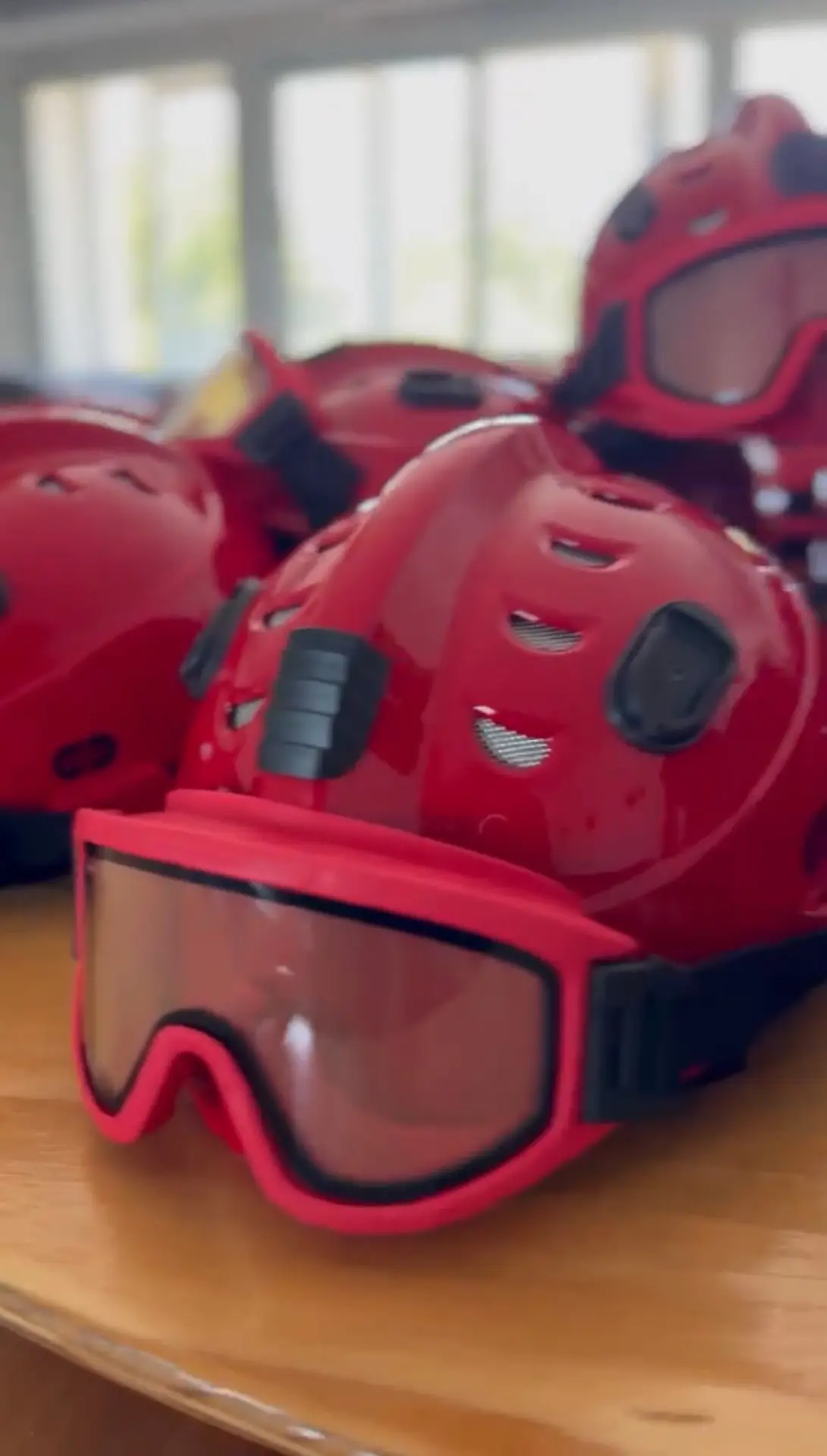
At Bomberos Búsqueda y Rescate España (BBRE), we continue to work on improving and updating the resources available to our teams. This time, we are incorporating new SICOR EOM helmets, a model designed for various activities related to technical rescue and emergency interventions.
This new addition represents a further step towards our goal of having appropriate material to face different operational scenarios and reinforce the safety of our professionals during interventions.
A Helmet Designed for Technical Rescue
The SICOR EOM is a protective helmet intended for various activities related to rescue and emergency intervention.
According to official manufacturer information, it is Personal Protective Equipment (PPE) of category III and is certified according to various European standards related to rescue activities.
Among the standards indicated by SICOR are EN 16471:2014, relating to helmets for firefighters used in wildland firefighting; EN 16473:2014, specific for helmets intended for technical rescue; EN 12492:2012, relating to helmets for mountaineering; and EN 1385:2012, related to helmets used in canoeing, kayaking, and whitewater activities.
These certifications allow the helmet to be used in different scenarios, always in accordance with the conditions and limitations established for each certification.
The National Institute for Safety and Health at Work (INSST) highlights the importance of selecting head protection equipment by considering the specific risks associated with activities such as technical rescue and forestry work.
Features of the SICOR EOM
The SICOR EOM features a shell made of thermoplastic material reinforced with fiberglass, designed to provide protection against various risks associated with the activities for which it is certified.
The adjustment system allows the helmet to be adapted to different head sizes, specifically between 52 and 64 centimeters, while the retention system includes a chin strap with quick adjustment.
The helmet also has a ventilation system protected by a metal mesh, along with a system that allows its opening to be regulated.
According to the specifications provided by the manufacturer, the helmet's weight is approximately 750 grams, while with the integrated safety goggles, it reaches approximately 900 grams.
These features aim to combine protection, fit, and comfort in interventions where professionals may spend long periods working in demanding conditions.
A Helmet Prepared for Different Emergency Scenarios
One of the features that make the SICOR EOM particularly interesting for a search and rescue team is its versatility.
The manufacturer considers its use in various activities, including:
Technical Rescue: interventions in structures, accidents, industrial environments, and other scenarios where there may be risks of impact, falling objects, or other hazards associated with the environment.
Rescue at Height: operations conducted at height where a head protection system compatible with this type of work is required.
Whitewater Rescue: interventions in aquatic environments and areas with currents and particularly complex conditions.
Wildland Fires: the helmet is also specifically certified for certain activities related to wildland firefighting.
For an organization like BBRE, which may participate in very different emergency scenarios, having versatile equipment is an advantage when configuring teams based on the characteristics of each intervention.
Rescuer Protection is Also a Priority
When we think of a search and rescue operation, we usually think of tools, machinery, communication equipment, or specialized systems.
However, there is one element that is present from the very beginning of any intervention: the protection of the rescuers themselves.
Professionals may have to work in environments with unstable structures, falling materials, dust, sharp objects, uneven terrain, work at height, high temperatures, or various risks stemming from the emergency itself.
For this reason, having an appropriate protective helmet for technical rescue is not simply having another piece of operational equipment.
It is a fundamental part of the professional's protection system.
The INSST points out that the selection of firefighting and technical rescue helmets must be made considering the specific risks present during the activities for which they will be used.
Equipment, Training, and Preparation
At BBRE, we understand preparation as a combination of different elements.
Having good equipment is not enough.
It is necessary to know it, train with it, and know how to use it correctly within the established procedures for each type of intervention.
Therefore, the incorporation of new personal protective equipment for firefighters and rescuers is part of a much broader process in which training, practice, and experience play a fundamental role.
In a real emergency, every element counts.
The preparation of professionals must be accompanied by adequate resources that allow them to work safely and effectively in constantly changing scenarios.
New Resources for Bomberos Búsqueda y Rescate España
The incorporation of the new SICOR EOM helmets signifies for Bomberos Búsqueda y Rescate España continued progress in improving our resources and the preparation of our teams.
Our goal is to have training, experience, procedures, and adequate equipment to respond to different emergency situations, both in Spain and wherever our collaboration may be needed.
Because a search and rescue intervention begins long before arriving at the emergency site.
It begins with preparation.
It begins with practice.
It begins with training.
And it also begins with having the necessary equipment so that our professionals can carry out their work safely.
We will continue working to improve our resources, our training, and our response capacity to emergency situations.
Because being prepared is also a way of saving lives.