
Introduction
Natural disasters and emergencies can occur at any time: from heavy rains and floods to power outages or domestic accidents. Having a basic home emergency kit can make the difference between a controlled situation and a serious risk.
A well-prepared emergency kit allows for quick action, ensures family safety, and facilitates coordination with rescue and assistance services when needed.
In this article, we explain what a home emergency kit should contain, how to organize it, and tips for keeping it always ready.
What is a Basic Home Emergency Kit?
A basic home emergency kit is a collection of essential materials and resources that allow a family to face critical situations without relying on immediate external assistance.
These kits are recommended for storms, earthquakes, floods, power outages, or domestic accidents.
Objectives of the Emergency Kit
Ensure survival and first aid until emergency services arrive.
Maintain communication and coordination with rescue teams.
Provide basic food, water, and shelter resources for several hours or days.
Reduce stress and uncertainty in crisis situations.
Essential Elements of an Emergency Kit
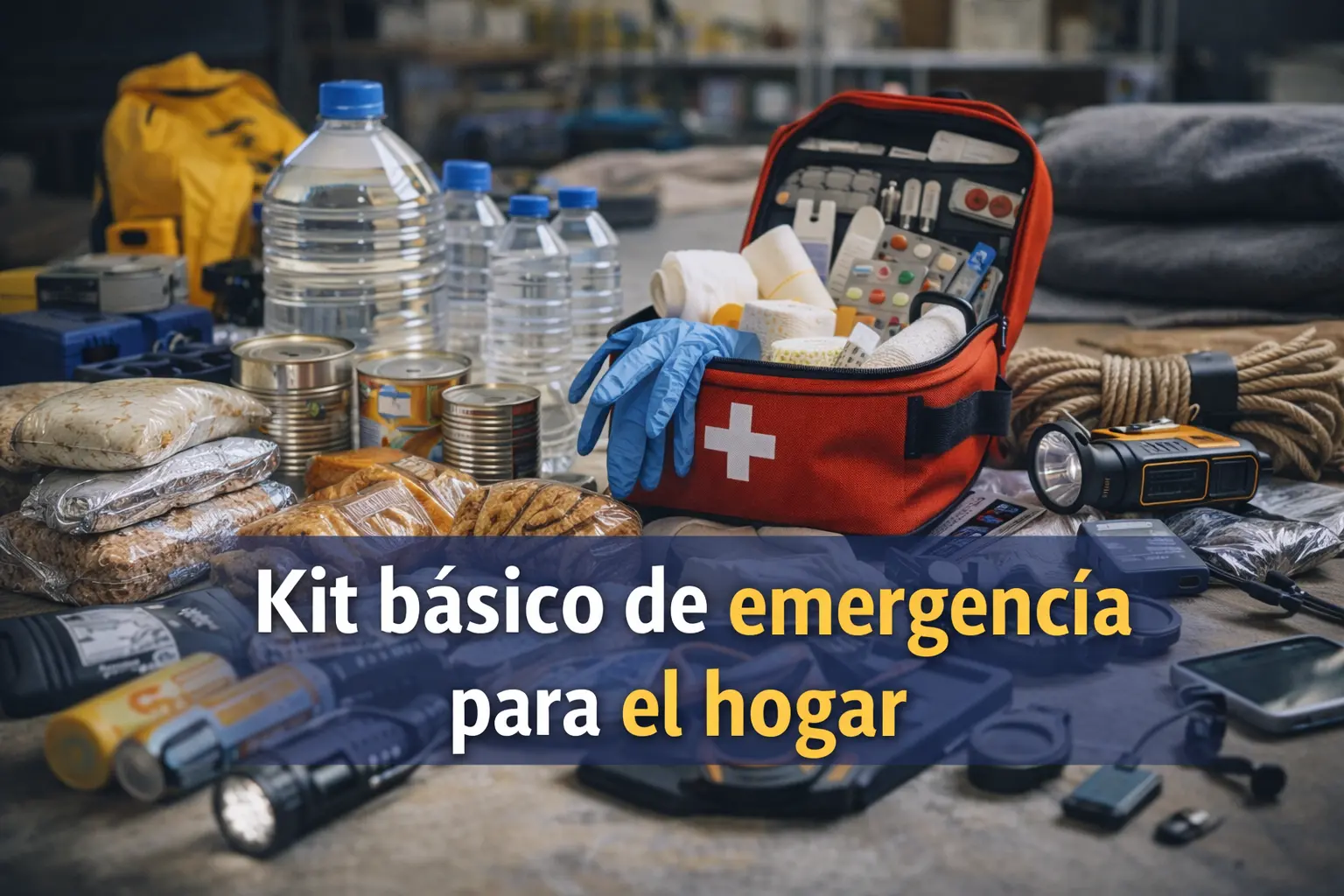
A good basic home emergency kit should include various types of resources, divided into categories:
Water and Food
Drinking water: at least 3 liters per person per day (minimum for 3 days).
Non-perishable foods: canned goods, nuts, energy bars.
Manual can opener and basic utensils.
Sanitary and First Aid Supplies
First aid kit with bandages, gauze, disinfectants, and dressings.
Basic medicines (paracetamol, antihistamines, pain relievers).
Latex gloves and face masks.
First aid manual.
Tools and Equipment
Flashlight with extra batteries or a rechargeable light.
Battery-powered or hand-crank radio to follow official information.
Duct tape, multi-tool knife, rope.
Portable lights and reflectors in case of a blackout.
Communication and Documentation
List of emergency contacts (Civil Protection, Red Cross, local police).
Copies of important documents (ID, insurance, medical history).
Charged mobile phone with external battery.
Clothing and Shelter
Warm clothing, sturdy footwear, and thermal blankets.
Raincoats and gloves for rain or low temperatures.
Tips for Organizing and Maintaining the Emergency Kit
Having the kit is not enough; it's essential to keep it accessible and updated:
Locate it in a known and easily accessible place.
Periodically check food and medicines for expiry dates.
Adapt the kit according to the number of people in the house and specific needs (children, elderly, pets).
Instruct all family members on how to use the kit's elements.
How the Emergency Kit Helps During Disasters
A basic home emergency kit allows families to:
Stay safe until rescue teams arrive.
Reduce risks of dehydration, injuries, or exposure to cold.
Maintain constant communication with emergency services.
Act calmly and effectively, minimizing anxiety and chaos.
In situations like floods, earthquakes, or storms, having this kit is a key step towards family resilience.
Conclusion
Preparing a basic home emergency kit is an act of responsible prevention that can save lives.
From our search and rescue NGO, we recommend that all families have an updated and accessible one, and that they familiarize themselves with its use before any emergency occurs.
Being prepared is the first way to protect your loved ones and facilitate the work of rescuers.