
What to do in case of an earthquake: practical guide with safety recommendations
Earthquakes are unpredictable natural phenomena that can occur at any time. Knowing what to do in case of an earthquake is essential to reduce risks and protect our safety and that of those around us. In this guide, we explain the main recommendations during an earthquake, in a clear, simple, and easy-to-remember way.
How to prepare before an earthquake
Prevention is the first step to minimize damage. Preparing your home and knowing how to act in advance can make a difference.
It is important to secure tall furniture, shelves, and heavy objects to prevent them from falling. It is also advisable to check balconies, cornices, and structural elements that could detach.
Additionally, it is recommended to have an earthquake emergency kit, which includes a flashlight, batteries, radio, a basic first aid kit, and a charged mobile phone. Knowing the location of gas, water, and electricity shut-off valves will make it easier to act quickly if necessary.
What to do during an earthquake
If a seismic event occurs, staying calm is essential. Do not run out or use elevators, as they increase the risk of accident.
The best option is to protect yourself under a sturdy table or position yourself next to an interior wall, away from windows, glass, and objects that could fall. Duck, cover, and hold on until the shaking stops helps reduce injuries.
What to do in an earthquake if you are at home
Inside the home, it is advisable to stay away from the kitchen, as it often concentrates objects that can fall or break. Also, be cautious of the floor, which may be covered with glass or other sharp elements. Protecting your feet is essential before moving.
What to do in an earthquake in public buildings
In places like shopping centers, schools, or cinemas, do not run or push. Crowds increase the danger of falls.
The safest thing is to remain inside and seek shelter under tables, desks, or solid structures until the movement ends.
What to do in an earthquake if you are in a car
If the earthquake occurs while you are driving, reduce speed and stop the vehicle in a safe, open area. Avoid stopping under bridges, tunnels, buildings, or power poles.
Remain inside the car until the seismic event has completely finished.
What to do in an earthquake if you are on the street
When the shaking happens outdoors, it is important to move away from buildings, facades, balconies, trees, and electrical cables. Finding an open space reduces the risk of impact from falling debris.
What to do after an earthquake
Once the movement has ended, check for possible damage and, if possible, turn off the gas, water, and electricity supply to prevent fires or leaks.
Do not enter damaged buildings until they have been inspected by technicians and use the phone only for emergencies. Stay informed through official channels and follow the instructions of emergency services.
What to do if you are trapped after an earthquake
If you become trapped under rubble, try to remain calm. Protect your nose and mouth to avoid inhaling dust and use flashlights, whistles, or tapping to signal your location.
Shouting should be the last resort, to avoid unnecessary exhaustion.
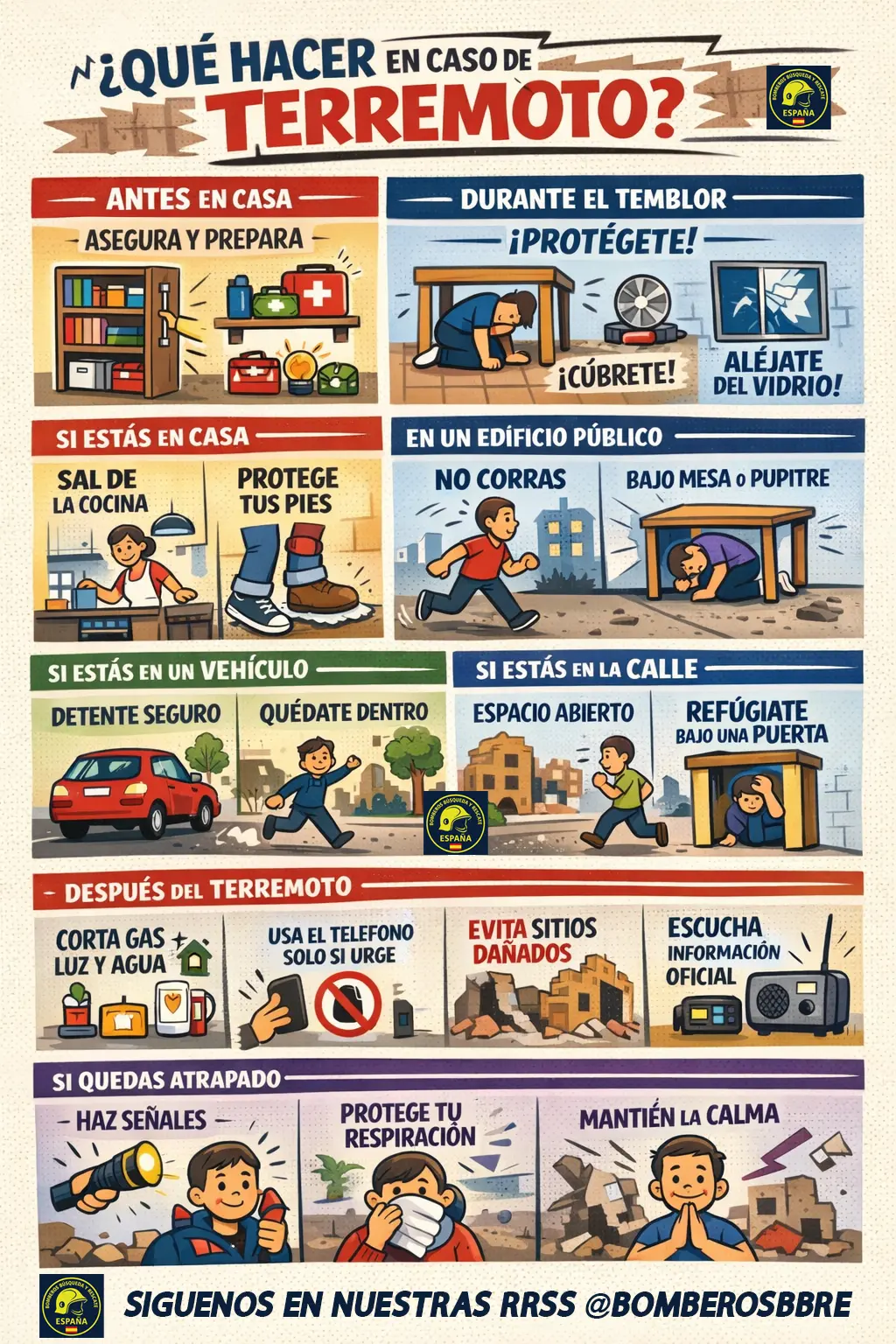
Infographic: earthquake recommendations
To facilitate understanding and recall of these measures, we have prepared an infographic on what to do in case of an earthquake, with visual and simple indications that summarize the main safety guidelines before, during, and after a seismic event.