
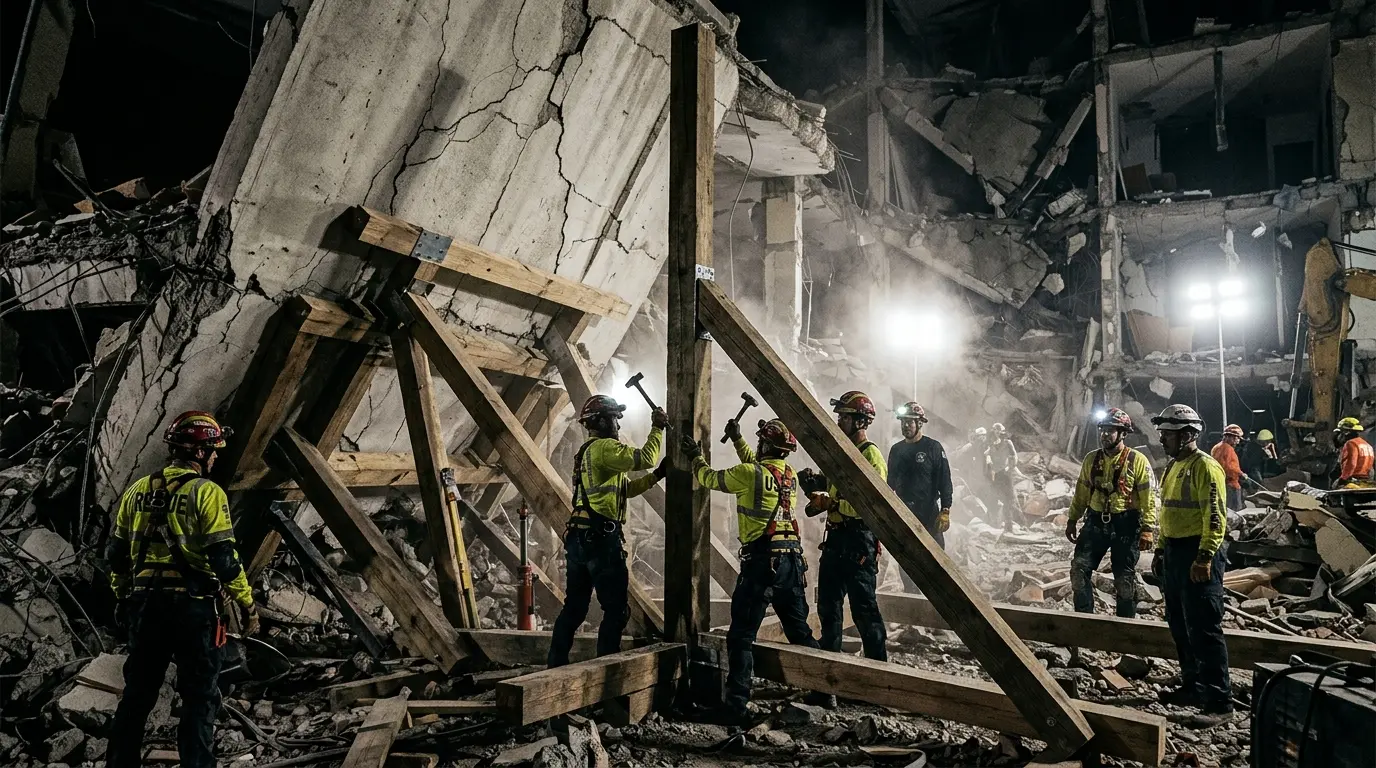
Important: The goal of emergency shoring is NOT to return the building to its original state or repair the structure, but to temporarily create a "safe" environment (workspaces and escape routes) that will hold up long enough to carry out victim extraction and protect the rescue team from aftershocks.
Types of Shoring in Collapsed Structures
There are multiple geometric configurations designed to absorb different types of forces (vertical, lateral). These are the most used in international USAR doctrine:
1. Vertical Shoring
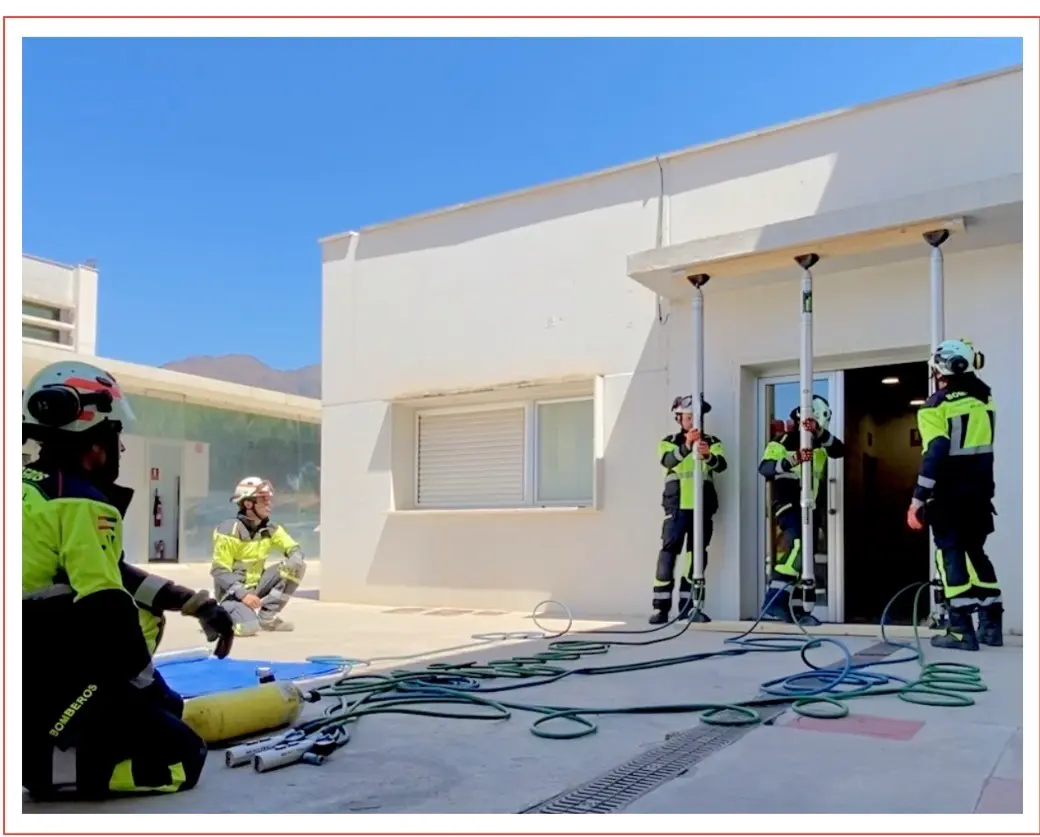
It is one of the first resources used to quickly stabilize fallen roofs and floors temporarily.
Use: It is used to secure passageways or stabilize a concrete slab that threatens to fall, distributing the weight from the roof to the ground or consolidated debris.
Horizontal Shoring:
Used to support vertical elements so that the shoring does not hinder ongoing work, such as different types of bracing. This type of horizontal shoring is also called timbering.
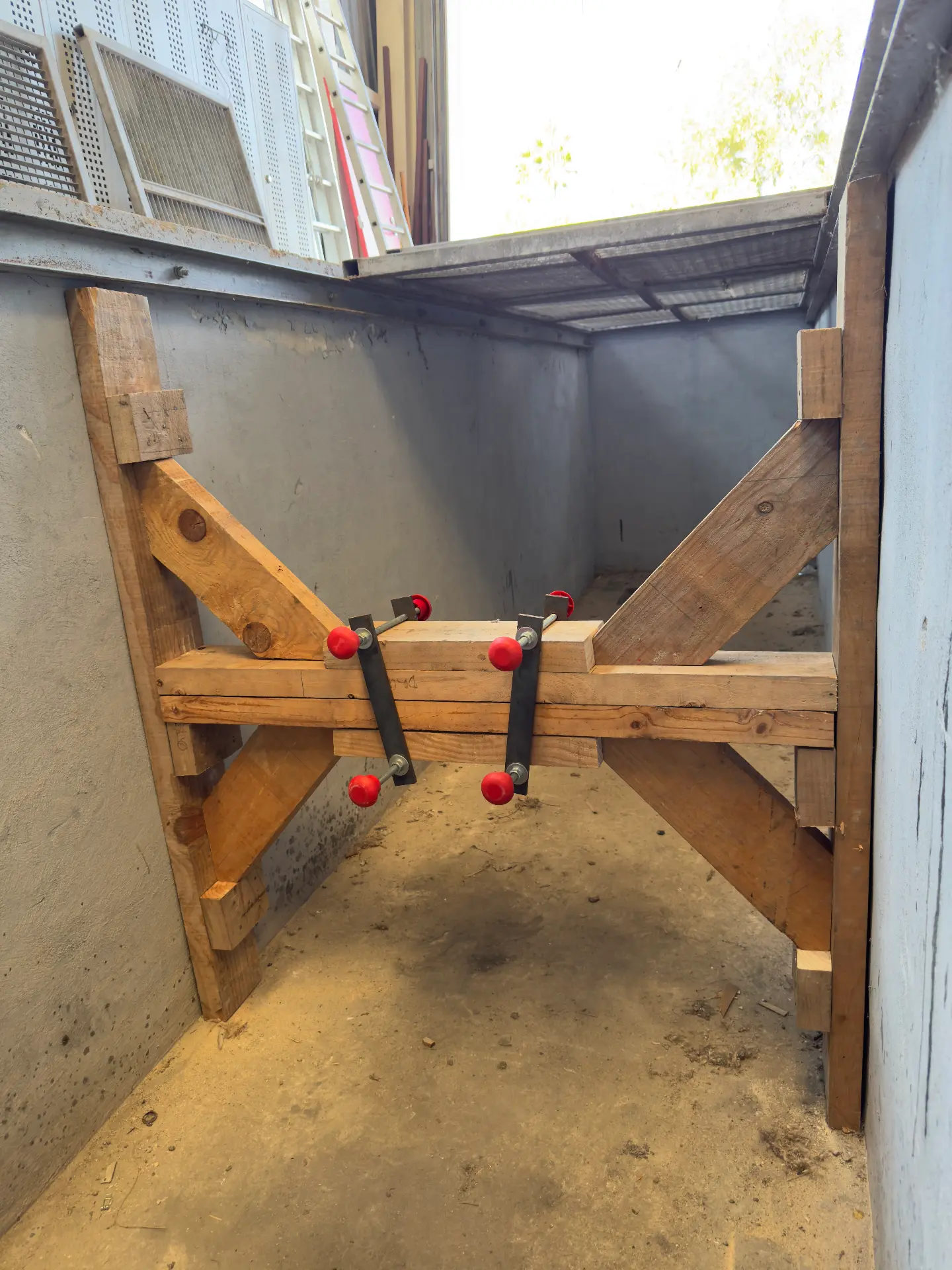
3. Window and Door Shoring
Door and window frames are often the weakest points after structural failure, but they are also the natural entry and exit routes for firefighters.
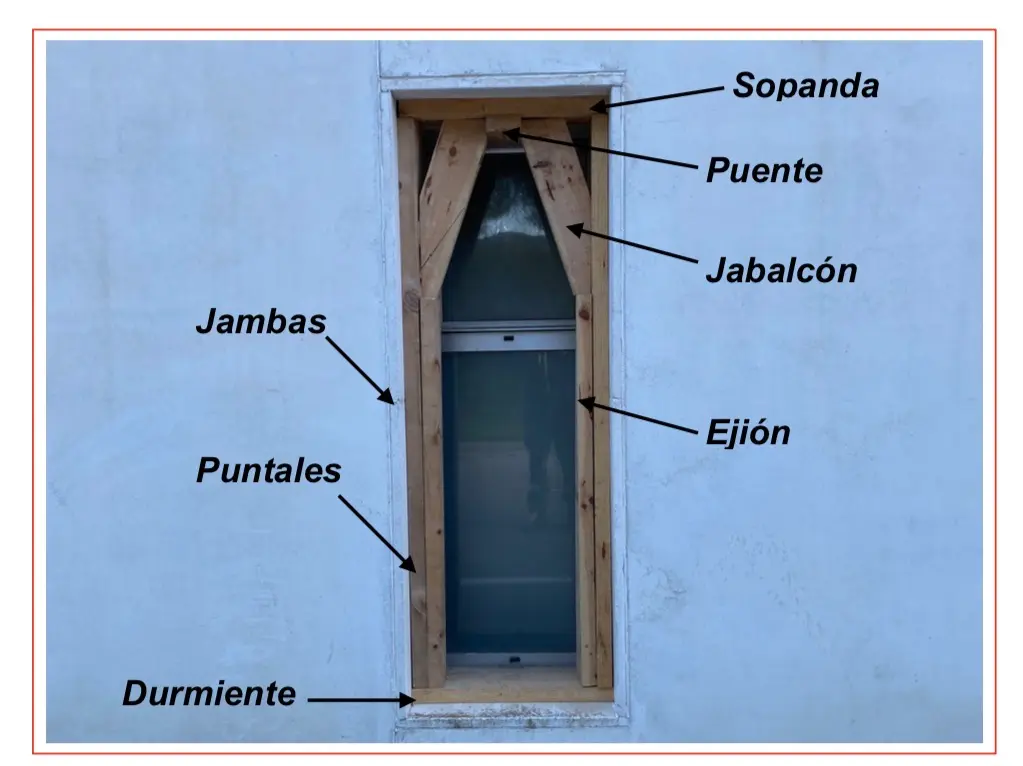 In this specific case above, it would be a door where passage is foreseen, but for example, we would have this other one in the form of a St. Andrew's cross where that possibility would not exist:
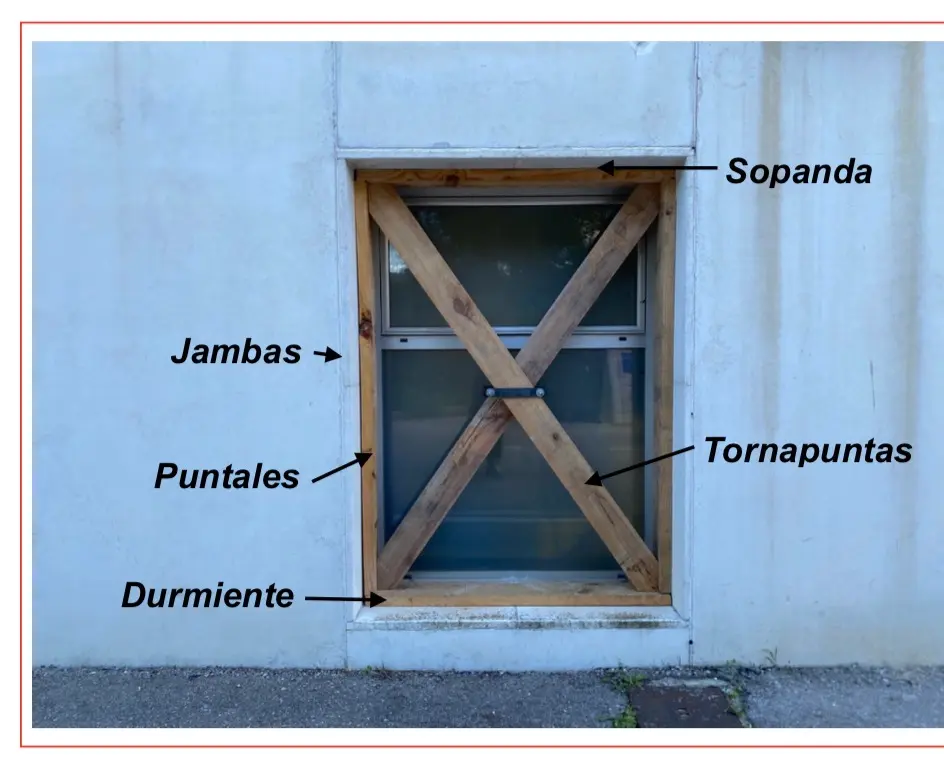
Use: A reinforced wooden frame is built within the existing door or window opening to prevent it from collapsing while teams transit through it.
3. Diagonal or Buttress Shoring
When a load-bearing wall has lost its verticality and threatens to collapse outwards or inwards (domino effect).
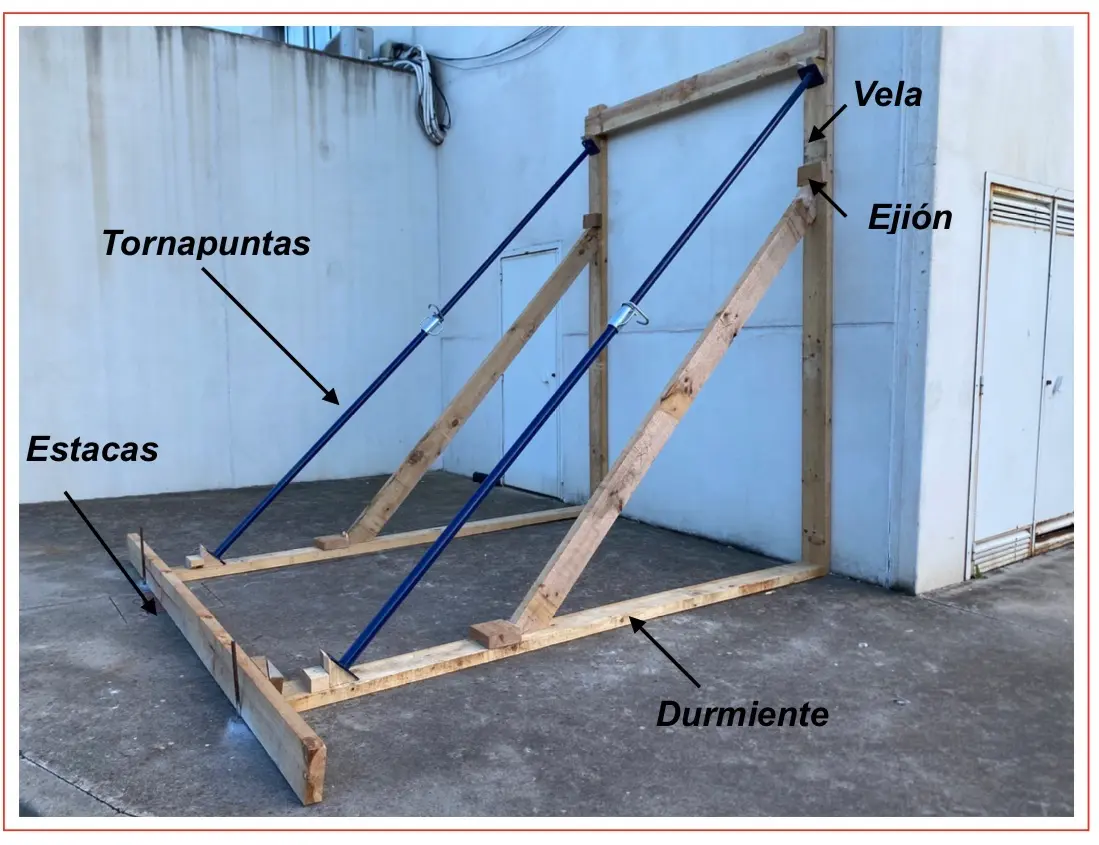
Use: Diagonal beams are installed resting on the ground and against the unstable wall. These structures transfer the lateral load of the wall to the ground, preventing its collapse.
Materials Used in USAR Operations
Although modern technologies exist, wood remains the undisputed king of shoring for several reasons:
Acoustic warning: Wood "talks." Before breaking under too much pressure, wood cracks loudly, giving rescuers valuable time to evacuate the area. Steel, on the other hand, can fail and bend suddenly.
Adaptability: It can be quickly cut to size on-site with chainsaws or circular saws.
Pneumatic and Mechanical Struts: Systems like Resqtec struts or from other brands are increasingly used for their incredible deployment speed, often combined with wood to secure initial loads in minutes.
Safety as the Absolute Priority
The number one rule in collapsed structures is not to move anything that should not be moved, and to stabilize everything before entering. A poor assessment of weight and load transfer can cause secondary collapses, which are the leading cause of mortality among rescue teams worldwide.
If you are interested in the world of technical rescue or represent an institution that wishes to collaborate with the training and deployments of Bomberos Búsqueda y Rescate España, do not hesitate to visit our contact section. Technical preparation is what saves lives!