What Do Firefighter Marks on Buildings After an Earthquake Mean? The INSARAG Methodology for Coordinating International Rescues
When a Simple Mark Can Mean the Difference Between Life and Death
After a major earthquake, images often show collapsed buildings, streets covered in debris, and rescue teams working tirelessly.
However, there's one detail that often goes unnoticed by most people: the marks painted on the facades.
Letters, numbers, squares, arrows, or symbols made with spray paint that, far from being simple notations, constitute a true international language used by specialized urban search and rescue teams.
Each of these marks contains essential information for coordinating the work of hundreds of rescuers from different countries. Thanks to them, teams can know which buildings have already been inspected, what risks exist, or if victims have been located.
Behind this system is INSARAG (International Search and Rescue Advisory Group), the United Nations-promoted international network that establishes a common methodology for all USAR (Urban Search and Rescue) teams.
And although few people know about its existence, this language can help save many lives.
What is INSARAG?
INSARAG (International Search and Rescue Advisory Group) is an international network promoted by the United Nations Office for the Coordination of Humanitarian Affairs (OCHA).
Its main objective is for all international search and rescue teams to work using the same procedures, regardless of the country they come from.
Thanks to this methodology, a Spanish team can continue the work initiated by a Japanese, Mexican, or French team without needing to re-inspect a building from scratch.
International coordination is one of the fundamental pillars of modern urban rescue.
What is a USAR Team?
Before discussing the marking system, it's useful to know what USAR stands for.
The acronym USAR stands for Urban Search and Rescue, meaning teams specialized in urban search and rescue.
These are highly trained units to intervene in:
Earthquakes.
Explosions.
Building collapses.
Structural failures.
Major disasters.
These teams are composed of different specialists:
Firefighters.
Rescuers.
K9 handlers.
Veterinarians.
Structural engineers.
Doctors and medics.
Logistics and communications specialists.
All work following the INSARAG methodology.
Why is it Necessary to Mark Buildings?
Imagine a city where thousands of buildings have collapsed.
Dozens of international teams are working simultaneously.
Without a common system, numerous problems would arise:
Two teams could inspect the same building.
No one would know which areas were still pending.
Information about potential victims would be lost.
Accidents could occur when entering buildings already deemed unsafe.
For this reason, INSARAG developed a common visual language that allows for quick and easy information sharing.
Each mark prevents errors and saves time that, in an emergency, can be decisive.
When Are Buildings Marked?
Marking begins from the moment a team starts evaluating a structure.
As operations progress, the information is updated to reflect:
The status of the search.
Structural risks.
Victim locations.
The building's condition.
The goal is not only to inform other teams but also to maintain a clear record of all work performed.
The Main Markings Used in the INSARAG Methodology
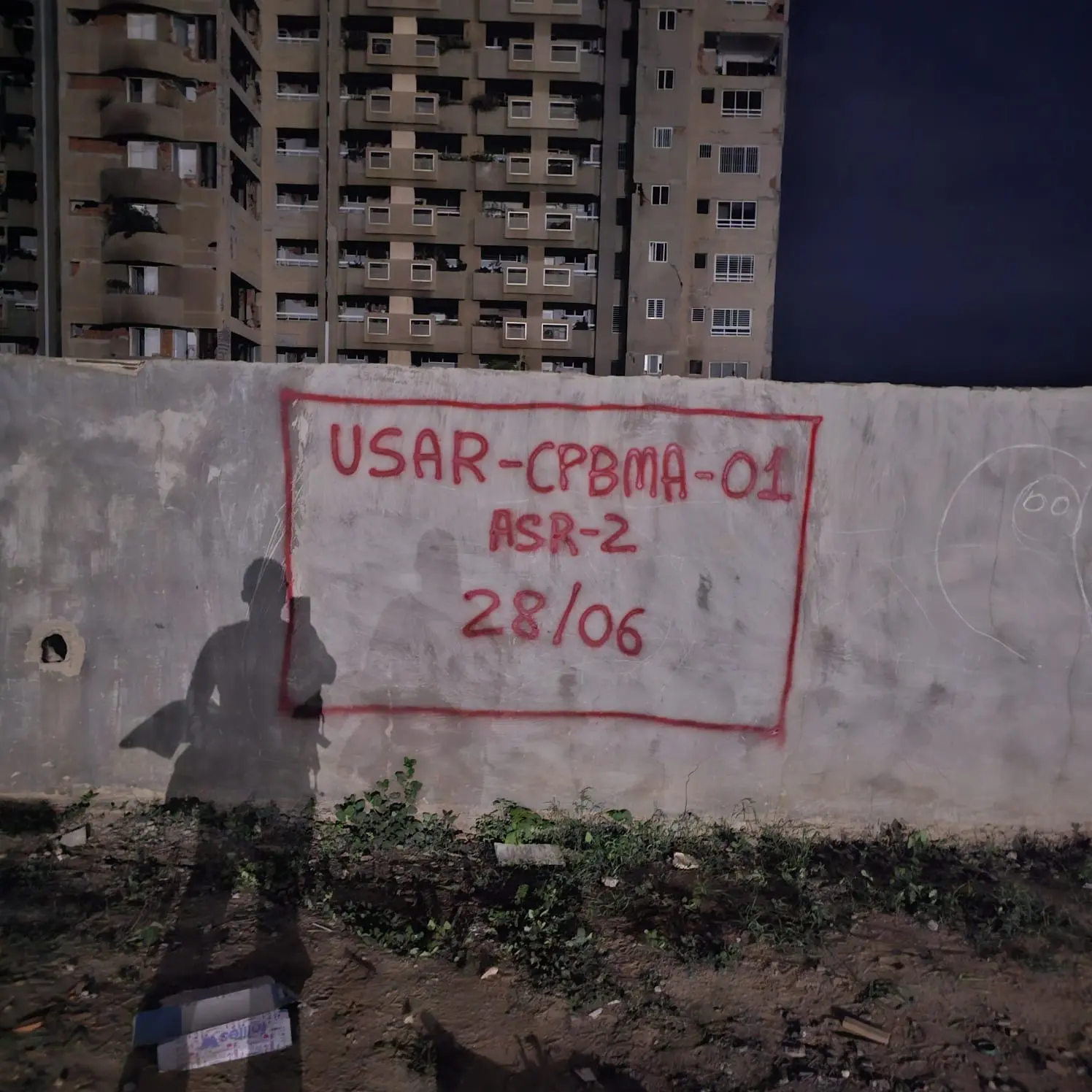
1. Worksite Triage Marking
This is the first marking a structure receives.
Its purpose is to identify the building and record initial information before the search begins.
What Information Does It Usually Contain?
Team performing the evaluation.
Date and time.
Building identification.
Observed risks.
Intervention priority.
This marking allows any other team to immediately know that the structure has already been evaluated.
2. Rapid Clearance Marking (RCM)
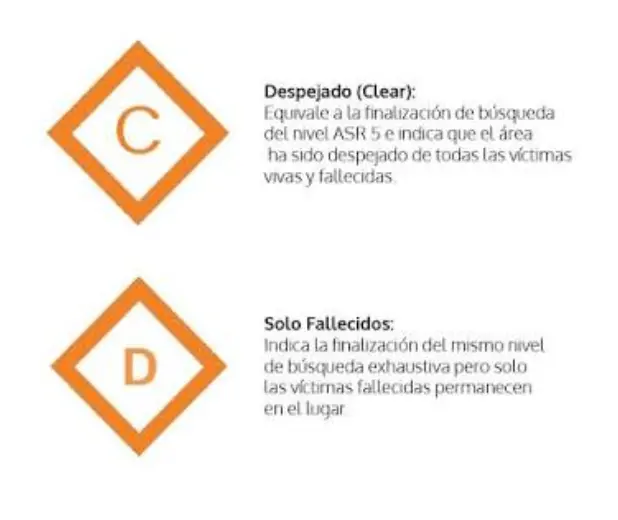
When a rapid search is conducted, the building receives a Rapid Clearance Marking.
Its function is to immediately communicate the results of that initial inspection.
This marking can indicate:
Building searched.
No victims were found during the rapid search.
A more exhaustive technical search is required.
The building presents risks that require additional measures.
Thanks to this system, other teams are prevented from repeating the same work.
 3. Victim Marking
When a victim is located during a search operation, teams use a specific marking.
This system is not intended to identify the person but to provide operational information.
Among other aspects, it can indicate:
Number of victims located.
Approximate location.
Date and time.
Team that performed the location.
Status of the intervention.
This procedure allows any relief team to continue the work without losing information.
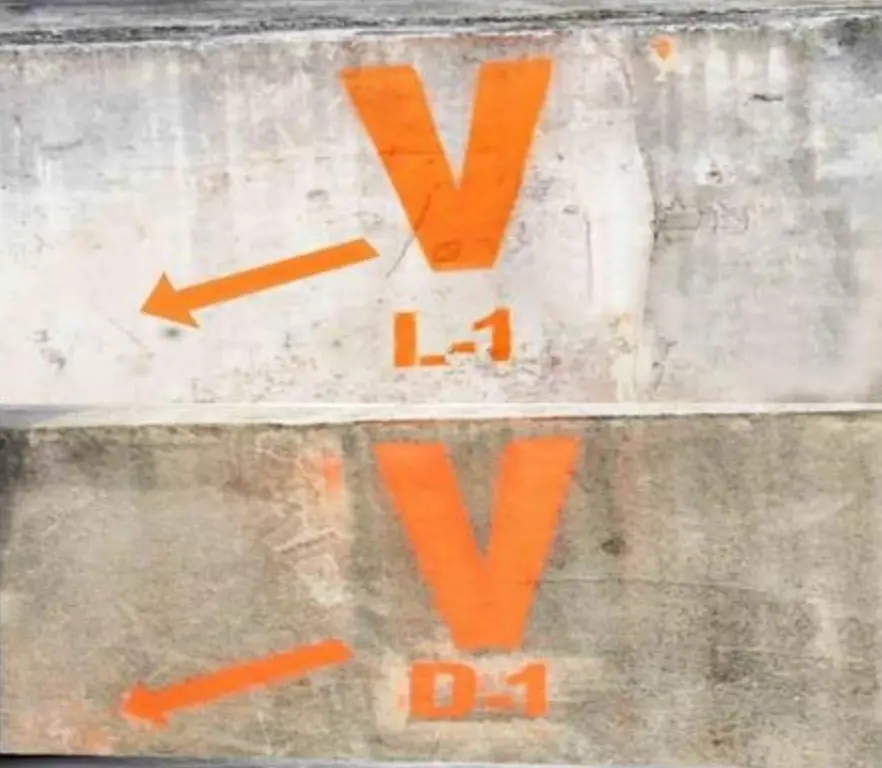 4. Structural Evaluation
Not all buildings can be safely inspected.
Before entry, specialists perform a structural evaluation.
Structures can generally be classified as:
Accessible Building
The structure allows work with an acceptable level of risk.
Restricted Access
Only certain areas can be explored, and always under strict safety measures.
Inaccessible Building
There is a high risk of collapse, and entry is prohibited until other measures are taken.
The safety of rescuers is always the priority.
5. Auxiliary Markings
In addition to the building, teams may mark:
Search sectors.
Access points.
Safe routes.
Hazardous areas.
Meeting points.
Areas assigned to other teams.
These markings allow for the coordination of operations where hundreds of professionals from different countries may be involved.
Who Can Make These Marks?
One of the most common mistakes is thinking that any firefighter can paint these symbols.
In reality, they are part of an international methodology and must be used by teams specifically trained in USAR procedures.
Each symbol has a specific meaning and a defined use.
Interpreting it incorrectly could lead to accidents or delay rescue operations.
Much More Than Paint on a Wall
When we see images of an earthquake, we usually focus on the machinery, the rescue dogs, or the teams working in the debris.
But few people know that simple marks painted on a facade contain life-saving information.
Behind each symbol is a structural assessment, a technical search, an operational decision, and hours of coordinated work.
It's a silent language that allows rescuers from all over the world to work as a single team.
And precisely that coordination is one of the great pillars of the success of international search and rescue operations.
Fun Facts About the INSARAG Marking System
Is Orange Paint Always Used?
It's common to use highly visible spray paints, such as orange or red, although the color can vary depending on the country or available resources. The important thing is that the marking is clearly identifiable.
Are These Marks Erased?
Yes. Once completed